

Feeling a little overwhelmed by the idea of starting a new practice? You’re not alone. I remember my first class clearly—a mix of curiosity and nerves. But giving it a genuine chance was one of the best decisions I ever made for my overall well-being.
This ancient tradition comes from the Sanskrit word “yuj,” meaning to connect or unite. For thousands of years, it has been about fostering a powerful link between your mind, body, and spirit.
While its roots are spiritual, the modern application offers incredible benefits for people of all ages and fitness levels. You can expect to build strength, improve flexibility, and develop a deeper sense of body awareness.
This guide is designed to make your first steps simple and enjoyable. We will walk through basic poses, breathing techniques, and how to weave this practice into your daily life for lasting health improvements.
Getting Started with Yoga
When you’re new to mindful movement, the most important thing is to begin with curiosity rather than pressure. You might be surprised how simple the foundational concepts become once you break them down.
Understanding the Basics
This ancient tradition goes far beyond physical exercise. It’s a holistic practice connecting your body, mind, and spirit that has been refined over thousands of years.
In my experience, new practitioners often worry about being flexible enough. But this discipline meets you exactly where you are. Every person progresses at their own comfortable pace.
Setting Your Intentions for Practice
Setting intentions is a fundamental part that distinguishes this from regular workouts. Your intention guides your focus and creates meaning in each session.
You could dedicate your practice to personal growth, stress relief, or simply showing up for yourself. Start with just 10-15 minutes a few times weekly.
Build comfort gradually without overwhelming your body. The real magic happens when people embrace the journey rather than fixating on perfection.
Remember, what works for one person may differ for another. It’s about discovering your own path and honoring your body’s unique needs.
Benefits of Yoga for Your Mind and Body
What truly amazed me when I first started was how quickly I began noticing positive changes in my daily life. The scientific research now confirms what practitioners have known for centuries about these incredible benefits.
Enhanced Flexibility and Strength
One of the most immediate benefits you’ll experience is improved flexibility. The practice involves stretching muscles in ways we rarely do normally.
This gradually increases your range of motion and reduces stiffness. Many people are surprised to discover how much strength they build by supporting their own body weight in various poses.
Reducing Stress and Anxiety
The combination of movement, breath work, and mindfulness creates a powerful approach to mental wellness. This practice may help activate your body’s relaxation response.
It shifts you from “fight or flight” to “rest and digest” mode. Even a short 15-minute session can dramatically improve your mood and perspective.
These benefits compound over time. While you’ll feel some immediate relief, the deeper transformations develop with consistent practice.
How Yoga Improves Flexibility and Balance
Many beginners are pleasantly surprised by how quickly their flexibility and balance transform through consistent practice. These physical improvements often become the first noticeable changes that keep people motivated.
The magic happens through gentle, sustained stretching that lengthens muscles and connective tissues. Unlike forceful stretching, this approach gradually increases your range of motion without strain. Your body adapts beautifully when given time and patience.
Learning Key Stretching Techniques
Balance improvement comes from engaging stabilizing muscles during various poses. You develop proprioception—your body’s awareness of its position in space. This natural training enhances overall stability in daily activities.
A 2019 study confirmed that regular practice both slows flexibility loss and improves it in older adults. This shows it’s never too late to start addressing reduced flexibility from aging.
Key techniques include active stretching (engaging muscles while stretching), passive stretching (using props), and dynamic stretching (moving through ranges). Always breathe deeply into each pose and avoid bouncing or forcing.
Hold stretches for 30 seconds to a few minutes to allow muscles to release. Remember that progress isn’t linear—every body responds differently. With regular practice, poses that once felt challenging will gradually become accessible.
Yoga and Stress Relief: Finding Your Calm
With over 80% of American adults experiencing prolonged stress, finding effective relief methods has become essential for modern wellness. You might be surprised to learn that this ancient practice offers more than just physical benefits—it provides powerful tools for mental calm.
A regular routine may help manage stress levels and dramatically improve your quality of life. The real magic happens when you integrate breath work, meditation, and mindful awareness into your sessions.
Combining Breath Work and Meditation
Slow, controlled breathing directly influences your nervous system. This technique activates relaxation responses that help relieve tension stored in both your body and mind.
When you synchronize movement with your breathing, it creates a moving meditation. This practice quiets mental chatter and brings you fully into the present moment.
Additional traditions like chanting and sound baths may also provide profound relief from anxiety. Finding your calm isn’t about eliminating stress entirely—it’s about developing resilience.
I encourage you to experiment with different techniques. Some people connect more with breath-focused practices while others prefer movement-based approaches. Discover what resonates most with your unique needs.
Yoga for Strength and Weight Loss
If you’re looking to build strength while managing your weight, this discipline might surprise you with its effectiveness. Many styles use your own body weight as resistance to build functional power.
Holding poses like plank and warrior variations engages multiple muscle groups. A 2021 study confirmed this practice effectively targets both upper and lower body strength.
For weight loss, this form of exercise burns calories and supports your goals. However, it works best as part of a comprehensive approach that includes mindful eating.
The key to reducing weight is maintaining a calorie deficit. While this activity contributes, it cannot spot-reduce belly fat alone.
Indirect benefits for weight loss include better stress management and improved sleep. These factors help regulate hunger hormones and reduce stress-eating.
Your body awareness also improves, helping you recognize true hunger cues. Combine this practice with cardio and resistance training for optimal results.
Remember that the confidence and appreciation you gain are equally valuable benefits. Sustainable weight management comes from balanced habits.
Exploring Different Yoga Poses
Learning different positions is where your journey truly comes to life and you build your physical vocabulary. This exploration makes the practice tangible and incredibly rewarding.
Popular Poses Like Downward Facing Dog
One of the most fundamental yoga poses is Downward Facing Dog. It forms an inverted V-shape with your hands and feet grounded, hips lifted high.
This foundational pose strengthens your arms and legs while stretching your entire backside. Many beginners find tight hamstrings challenging at first.
Bend your knees slightly or use blocks under your hands to make this pose more accessible. With practice, Downward Facing Dog becomes a comfortable resting position.
Experimenting with Sun Salutations
Sun Salutation sequences beautifully link multiple poses together with your breath. They create a moving meditation that warms your entire body.
These flowing sequences typically move through Mountain, Forward Fold, Plank, and back to Downward Facing Dog. Each Sun Salutation builds stamina and coordination.
In my experience, positions that feel awkward initially become familiar friends. Remember there’s no perfect way to do any pose—what matters is showing up and breathing mindfully.
A Closer Look at Yoga Asanas
Many practitioners discover that the real magic happens when they learn to adapt postures to their unique body. The term “asana” refers to the physical positions you practice. Understanding this traditional language helps you connect more deeply with this ancient discipline.
These asanas are designed to be accessible for all body types and ability levels. Modifications aren’t cheating—they’re intelligent adjustments that make poses safe and effective for where you are today.
Modifications for Beginners
Let’s examine Cobbler’s pose (Baddha Konasana) as an example. Sitting on a block or cushion elevates your hips, allowing your knees to open more naturally. This simple change reduces strain and improves the stretch.
When your knees sit high in this pose, your muscles work hard to hold them up. This prevents the relaxation needed for deep stretching. The solution? Place supportive blocks under each knee.
This allows gravity to gently work on your inner thigh muscles without forcing. The pose becomes both comfortable and effective for stretching neglected areas.
This modification principle applies to all asanas. Use props, adjust alignment, or choose variations that honor your current flexibility and strength. Even advanced practitioners use modifications to deepen their practice.
Remember that these poses should never cause pain. Modifications help you find that sweet spot where you feel challenged but not strained. You should always breathe comfortably and stay present in each asana.
Understanding the Mind-Body Connection in Yoga
Have you ever noticed how stress manifests as tension in your shoulders or how excitement quickens your heartbeat? This natural link between your mental state and physical sensations lies at the heart of this ancient practice.
The Sanskrit root “yuj” means to yoke or bind—fundamentally about uniting your mind and body. In our modern lives, these aspects often feel disconnected. This discipline originated in Ancient India specifically to cultivate this essential connection.
What does this mean practically? It’s developing awareness of internal signals during your practice. You learn to notice tension patterns and respond with compassion rather than pushing through discomfort.
This cultivates interoceptive awareness—your ability to sense what’s happening inside. You might recognize when you need rest or when you can safely challenge yourself further.
This heightened connection naturally extends into daily life. You become more attuned to your body’s needs around eating, sleeping, and stress management. Many beginners report feeling more “in tune” after just a few sessions.
Strengthening this mind-body link through practicing yoga isn’t mystical—it’s a practical skill that enhances your quality of life. You become more present and responsive rather than reactive to life’s challenges.
Types of Yoga Practice: Styles and Benefits
One of the most exciting aspects of beginning your journey is discovering the incredible variety of styles available. Each type offers unique characteristics, intensity levels, and benefits that can resonate with your personality and goals.
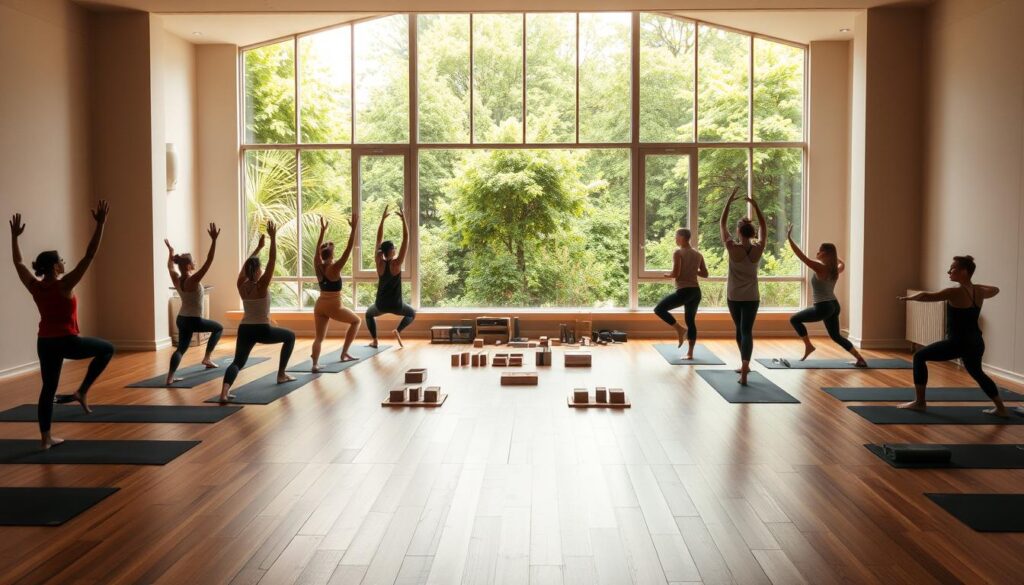
You’ll find everything from gentle, meditative practices to vigorous, athletic flows. This diversity means there’s truly a perfect match for every individual.
Exploring Hatha, Vinyasa, and More
Hatha provides a gentle, foundational approach ideal for newcomers. This type focuses on basic poses held for longer periods, helping you learn proper alignment and build confidence.
Vinyasa offers a more dynamic experience where poses flow together with breath. Often called “flow” practice, it builds cardiovascular fitness and strength while maintaining mindfulness.
Other popular types include Yin with long-held passive stretches, Restorative using extensive prop support, Power for athletic intensity, and heated room variations. Some people gravitate toward vigorous practice for physical challenge.
Others prefer gentle styles for stress relief and restoration. The best approach is to try several different classes and teachers to discover what feels right for your body.
Your preferences may evolve as your practice develops. Don’t feel locked into one type—cross-training between styles provides well-rounded benefits and prevents plateaus.
In my experience, the most effective practice is simply the one you’ll do consistently. Prioritize finding an approach that makes you excited to return to your mat regularly.
Incorporating Breathing Techniques into Your Practice
Your breath is the most powerful tool you already possess for transforming your practice. While physical poses get attention, conscious breathing forms the true foundation of any meaningful routine.
This formal practice of breath control is called pranayama. The term means “extension of life force” and represents an essential part of yoga that goes beyond physical postures.
Mastering Pranayama
A 2019 review of 1,400 studies found that yogic breathing improves functioning across multiple body systems. Controlling your breathing pace benefits cardiovascular health and influences heart, brain, and lung function.
Begin with simple techniques like Ujjayi breath. This creates a soft ocean sound by slightly constricting your throat. Another great starting point is three-part breath, filling your belly, ribs, and chest sequentially.
Start with just a few minutes daily on an empty stomach. Sit comfortably with an upright spine and never force your breath. What feels awkward initially becomes natural with patience.
You might be surprised how profoundly conscious breathing transforms your mental and physical state. This simple practice serves as the bridge connecting body and mind.
Yoga for Health: Managing Pain and Improving Posture
Living with chronic pain or poor posture can make everyday activities feel like a challenge. If this sounds familiar, you’re not alone. This gentle practice offers a compassionate approach to managing discomfort and enhancing your overall health.
A 2019 study found promising potential for this discipline to help improve quality of life for people dealing with persistent pain. It’s not a magic cure, but many find meaningful relief.
Strategies to Relieve Chronic Pain
Gentle movement promotes circulation without aggravating conditions. It also strengthens supportive muscles and releases deep tension patterns.
Developing better body awareness is key. You learn to recognize and avoid movements that trigger pain.
Modern life, with hours spent hunched over devices, creates real posture challenges. A 2020 review of 34 studies showed that this practice can help improve brain function related to interoception and posture control.
This means you naturally maintain better alignment. Poses that open the chest and strengthen the back directly counteract slouching.
Always consult your doctor before starting if you have chronic health issues. Work with an experienced instructor for safe modifications. Remember, the goal is progress, not perfection. Small, consistent efforts in your yoga practice lead to big gains in how you feel.
The Role of Meditation in Your Yoga Routine
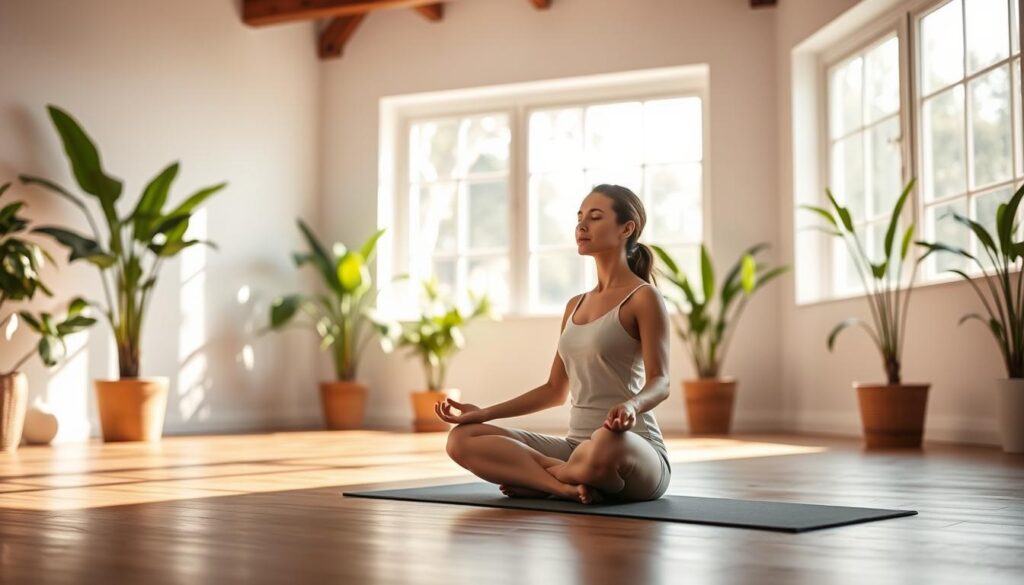
You might think of meditation as something separate, but it’s actually a core part of the tradition. The physical poses were originally designed to prepare your body to sit comfortably for mindful reflection.
Simple Meditation Techniques
Many people feel intimidated, worrying they can’t quiet their mind. The goal isn’t perfect silence but simply observing your thoughts with gentle awareness.
A 2023 review of 34 studies confirmed that yoga-based practices, including meditation, can reduce symptoms of depression and anxiety. This shows the mental health benefits are backed by solid research.
Start with breath awareness. Just sit quietly and notice the natural flow of your inhales and exhales. When your mind wanders, gently guide it back to your breath.
Another great technique is a body scan. You systematically bring your attention to each part of your body, releasing tension as you go.
Yoga nidra, or guided body scan meditation, is especially accessible. It induces deep relaxation and has been shown to effectively reduce anxiety, even if seated meditation feels challenging.
Begin with just five minutes in a quiet space. Use an app or recording for guidance and let go of any expectations. The benefits of this practice are subtle at first but become profound over time.
You’ll gradually develop a more spacious mind and better emotional regulation. This invaluable content helps you respond to life’s challenges with more calm.
Essential Yoga Equipment and Props
Think of props not as a crutch, but as your personal guides to a safer and more effective practice. They are intelligent tools that help you find proper alignment and make every pose accessible, regardless of your current flexibility.
Using Blocks, Cushions, and Straps
Yoga blocks are incredibly versatile. You can use them flat, on their side, or upright to provide different heights. Placing a block under each hand in a Forward Fold brings the floor closer, reducing strain on your hamstrings.
Cushions and bolsters offer wonderful support. Sitting on one elevates your hips, allowing your knees to relax in seated postures. This simple adjustment makes meditation much more comfortable for your body.
A yoga strap acts as an extension of your arms. It helps you reach your feet in a seated forward fold without rounding your spine. This maintains safe alignment and lets you deepen the stretch gently.
You don’t need fancy gear to start. Household items like thick books, firm pillows, and a belt work perfectly as substitutes. The goal is to support your journey, making each pose feel right for you.
Guidance on Finding the Right Yoga Class
With countless studios, online platforms, and class types available, choosing the right fit for your journey can seem like a big task. The perfect match for your needs is out there.
Start by considering your experience level, preferred intensity, and schedule. Class descriptions use specific words that give you clues. Look for terms like “gentle,” “flow,” or “all levels” to understand the pace and difficulty.
The instructor makes a huge difference in your experience. Teaching styles and personalities vary greatly. It’s wise to try classes with different teachers, even within the same style.
Think about your learning environment. In-person studio classes offer community and hands-on help. Online sessions provide convenience and privacy. Private instruction gives personalized attention for specific goals.
Practical matters like location, cost, and class size also matter. Many studios offer trial classes or introductory packages. This lets you experiment without a major commitment.
Reading reviews and talking to other people can provide helpful insights. Your own experience, however, is what truly counts. Give a new class a few tries before deciding if it’s right for you.
It often takes a few sessions to feel comfortable with a teacher’s style. This helps you determine if it supports your goals for practicing yoga long-term.
Integrating Yoga into Your Daily Life
Making your routine a natural part of your day is where true transformation begins. The real magic happens when this practice moves from occasional activity to integrated lifestyle.
Establishing a Consistent Routine
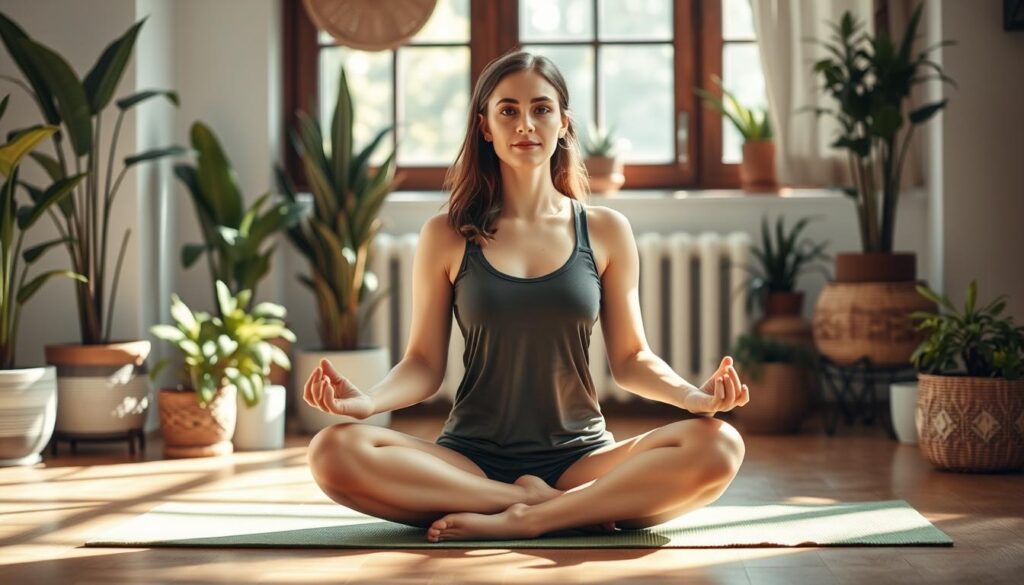
Start small and realistic. Even 10-15 minutes daily builds better habits than sporadic hour-long sessions. Practice at the same time each day to create consistency.
Link your practice to existing habits like morning coffee or bedtime routine. Keep your mat visible as a gentle reminder. This approach makes it feel natural rather than burdensome.
Tips for Long-Term Success
According to the Physical Activity Guidelines, this form of exercise works beautifully alongside resistance training and cardio. It contributes to overall fitness while offering unique mind-body benefits.
Set realistic goals and track your progress. Find an accountability partner or community. Celebrate small victories to maintain motivation over time.
Adapt your practice to life’s changing demands. Use shorter sessions during busy periods. Remember that consistency isn’t perfection—what matters is returning without guilt.
This integration creates sustainable rituals that enhance your quality of life. You’ll show up more fully for everything else that matters in your daily existence.
Conclusion
You’ve taken a wonderful first step by exploring this guide. Your curiosity is the most important tool you have.
We’ve covered a lot—from ancient roots to modern benefits. You learned about poses, breath work, and making it part of your life. The potential rewards are vast, including better strength, calm, and overall health.
Remember, this is deeply personal. There is no single right way for all people. Find what feels good for your body.
I started my own practice with similar questions. The greatest gift it gave me was learning to listen to myself. I’ve seen others find the same peace.
Don’t wait for the perfect moment to begin. Your yoga journey starts right where you are. Be kind to yourself as you learn.
Thank you for reviewing this content. I hope these articles inspire your first steps on the mat. This investment in yourself is one you will never regret.