

I remember my friend Sarah, a busy marketing manager who constantly felt like she was running on empty. Between deadlines, meetings, and family responsibilities, her mind was always racing. One particularly stressful Tuesday, she found herself sitting in her car before work, completely overwhelmed.
That’s when she decided to try something different. She closed her eyes for just five minutes and focused on her breathing. You might be surprised how those few quiet moments changed her entire day.
This ancient practice isn’t reserved for spiritual masters on remote mountaintops. Everyday people have used meditation for thousands of years to find calm amidst chaos. From Hindu traditions to modern wellness routines, the core purpose remains the same: helping us cope with stress in our busy world.
In my experience, the biggest hurdle isn’t finding time—it’s giving yourself permission to pause. Our culture celebrates constant productivity, but your mental health deserves priority too.
Throughout this guide, you’ll discover practical techniques that fit into your life. Whether you have five minutes or thirty, you’ll learn how this practice can bring real benefits to your daily routine. The best approach is the one that feels natural to you.
If you’ve ever felt too busy, distracted, or skeptical about trying meditation, you’re not alone. This journey is about finding what works for your unique life and needs.
Understanding Meditation and Its Benefits
Many people picture monks on mountaintops when they think of this practice, but it’s really about practical tools for modern life. It’s a set of techniques designed to enhance your attention and emotional awareness. The goal is mental calmness even when life gets chaotic.
Why Meditation Works for Stress Relief
When you practice regularly, you’re literally changing how your body responds to pressure. A 2017 review of 45 studies confirmed that various forms can help decrease physiological markers of stress like cortisol and heart rate.
These health benefits extend to stress-related conditions too. The practice may help with IBS, PTSD, and fibromyalgia symptoms. This gives hope to those who’ve tried other approaches with limited results.
Enhanced Mental Clarity and Focus
Regular meditation trains your mind to filter out distractions and stay present. This enhanced mental clarity makes everything from work projects to conversations feel more meaningful.
The benefits of meditation extend beyond immediate calm. Consistent practice can also improve memory and cognitive function. This may help fight age-related memory loss.
You don’t need hours to see these benefits. Even short daily sessions can reduce stress and improve mental clarity. This makes it an efficient investment in your well-being.
Substantial research backs these claims through systematic reviews analyzing thousands of participants. The science behind these benefits is well-established.
Meditation Techniques for Daily Calm
Finding your personal meditation style is like trying on shoes—some fit perfectly right away, while others need breaking in. The various techniques available mean there’s something for every personality and situation.
Exploring different approaches helps you discover what brings you the most peace. Don’t worry about finding the “right” method immediately.
Breathing Exercises and Focused Attention
Focused attention practice works like weight training for your mind. You concentrate on one anchor—often your breathing—and gently return your attention when thoughts wander.
Notice your torso expanding with each inhalation. Feel the subtle air movement through your nostrils. This simple technique can calm anxiety surprisingly quickly.
Guided Meditation and Loving-Kindness Practices
If silence feels uncomfortable, guided sessions provide helpful direction. Someone talks you through the process, which also helps when your mind tends to race.
Loving-kindness practice begins with developing compassion toward yourself. Through repetition, you extend these warm feelings toward others—even people you find difficult.
Research shows this technique genuinely increases kindness toward yourself and others.
Mindfulness Meditation for Routine Peace
Mindfulness meditation involves observing your thoughts and feelings without getting caught up in them. You notice sensations as they arise during daily activities.
This open-monitoring approach builds emotional resilience that carries into everyday situations. Different techniques serve different purposes throughout your day.
Breathing exercises provide immediate calm, while loving-kindness practices help when feeling disconnected. Try various methods over several weeks to find what resonates.
Simple Steps to Start Your Meditation Practice
The beauty of beginning this journey is that it asks for very little from you to start. You don’t need a special room or expensive gear. The goal is simply to connect with your body and find a few moments of quiet. Many people find success by focusing on two key elements first.
Finding a Quiet Space to Begin
Your quiet space can be anywhere you won’t be interrupted for a few minutes. This could be your bedroom in the early morning, a parked car during a lunch break, or even a bathroom for a moment of peace.
Get comfortable. Sit in a chair with your feet flat on the floor and hands resting on your legs. If sitting is uncomfortable, you can lie down with a pillow under your head and knees bent.
Setting a Manageable Time Limit
When you’re new to the practice, a short time limit is your best friend. Start with just three to five minutes. This feels much more doable than a long session.
Set a gentle timer on your phone. This stops you from clock-watching and lets you relax. Research shows that even 13 minutes daily can boost attention and memory over eight weeks.
Your mind will wander, and that’s perfectly normal. The key is to notice your thoughts and gently guide your attention back without frustration. Starting small builds a lasting habit that grows with you.
Creating a Consistent Meditation Routine
The secret to making your practice stick isn’t finding more time—it’s making your routine feel natural. Consistency matters far more than session length when building this habit.
Morning Meditation Tips to Kickstart Your Day
Many people find the morning the best time for their practice. Your mind is fresh before daily stresses begin. Setting your alarm just 10 minutes earlier creates precious quiet time.

Try anchoring your session to an existing habit. Wake up, practice, then brush your teeth. This “habit stacking” makes your routine feel automatic faster.
Integrating Practice into Daily Life
If mornings don’t work, find your best time. Lunch breaks or evenings can be equally effective. The key is choosing a time you’ll actually use consistently.
Don’t worry if you miss a day. Life happens! Just start again tomorrow without guilt. Building a regular practice is like training a muscle—it gets easier with consistency.
Stick with your chosen time for a few weeks. You might find yourself looking forward to these peaceful moments instead of seeing them as chores.
Scientific Insights into Meditation’s Health Benefits
You might wonder if sitting quietly actually creates measurable changes in your body. The evidence is clear—this practice creates real physiological shifts that benefit your health.
How Meditation Regulates Stress and Blood Pressure
A systematic review of 45 studies confirmed that regular practice decreases physiological markers of stress. These include cortisol levels and heart rate.
Your body learns to calm down more easily with consistent practice. This reduces the wear and tear that chronic stress creates.
Blood pressure research shows particularly promising results. A systematic review of 12 studies found this practice may help reduce blood pressure.
The effect was strongest in older adults and those with higher initial readings. This matters because high blood pressure forces your heart to work harder and increases cardiovascular risks.
Research on Improved Memory and Reduced Anxiety
Studies involving nearly 1,300 adults found that regular meditation practice may decrease anxiety. The benefits were most dramatic for people with high anxiety levels.
An 8-week mindfulness program significantly reduced symptoms in people with generalized anxiety disorder. The practice also improve memory and mental clarity.
Research shows it may help fight age-related memory loss. Specific practices like Kirtan Kriya improve performance on neuropsychological tests.
These benefits of regular meditation accumulate over time. Consistent practice can also improve multiple health markers while adding quality to your years.
Essential Meditation Tools and Resources
Navigating the world of meditation support tools doesn’t have to be overwhelming. The good news is you truly need nothing special to begin—just yourself and a few quiet minutes.
Some resources can make your journey smoother, especially when starting out. The key is finding what feels natural for your lifestyle.
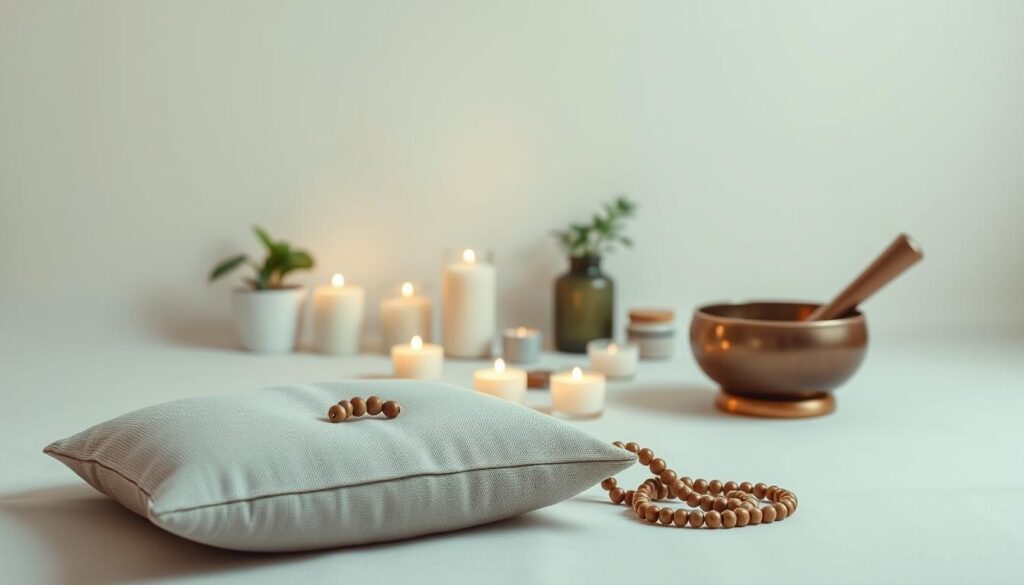
Many people find apps helpful for building consistency. These digital guides offer timers, progress tracking, and beginner-friendly sessions. The best apps provide structure without pressure, letting you explore at your own pace.
Recommended Apps, Classes, and Online Guides
If you prefer human connection, consider joining a class. Local studios and community centers often offer sessions. Online courses provide similar benefits with flexible scheduling.
You’ll find countless free resources too. YouTube channels and podcasts share quality instruction from experienced teachers. These platforms make various techniques accessible to everyone.
Remember that the perfect tool is the one you’ll actually use. Start simple with one or two resources that resonate with you. Your consistent practice matters more than any specific app or cushion.
Overcoming Common Meditation Challenges
It’s completely normal to face some bumps when you’re learning to meditate. Most people experience similar frustrations, and understanding these challenges can make your journey smoother.
Handling a Wandering Mind with Patience
Your mind will wander during practice—this happens to everyone. Instead of fighting this natural tendency, see it as part of the exercise.
When you notice your thoughts drifting, gently guide your attention back to your breath. This process of noticing and returning is like strength training for your focus.
Many people judge themselves harshly for not achieving a “blank mind.” Remember that the goal isn’t to stop thinking but to change your relationship with your thoughts.
Dealing with Physical Discomfort During Practice
Sitting still can sometimes cause physical discomfort, especially if you have back or knee issues. Your body might feel restless or achy.
The good news is that you can meditate in any comfortable position. Lying down is perfectly acceptable if sitting upright causes pain.
Use cushions for support or try a chair instead of the floor. The practice should reduce suffering, not create it. Adjust your setup until your body feels relaxed.
Be patient with yourself as you learn. Every session is different, and consistency matters more than perfection.
Meditation: A Beginner’s Guide to Empowered Well-Being
Beyond the immediate calm, this journey offers profound insights into who you truly are. It’s not about becoming someone new but discovering the person you’ve always been beneath the stress and busyness.

Embracing the Journey with Curiosity and Compassion
This practice may help you better understand your patterns and reactions. You create space to observe your thoughts without immediately acting on them. This increased awareness of why you do what you do is genuinely empowering.
Regular practice naturally cultivates compassion toward yourself and others. When you witness your own mind’s struggles, you develop more understanding for people dealing with their challenges. This emotional awareness helps you recognize and validate your feelings instead of suppressing them.
The most practical benefit might be learning to be less reactive when tough situations arise. That brief pause between stimulus and response gives you choice instead of automatic reactions. This practice can also help build more authentic relationships.
Approach your journey with curiosity rather than pressure to achieve perfection. Genuine interest in what you’ll discover makes it feel like an adventure rather than a chore. The changes happen naturally when you understand and accept who you already are.
Personalizing Your Meditation Experience
What if the key to successful meditation wasn’t about mastering one technique, but discovering what resonates with you personally? Your practice should feel like a natural extension of your life, not a rigid obligation.
Exploring Different Styles and Finding What Fits You
Choose your approach based on what you want to achieve. If you struggle with focus, try focused-attention practices. These build your attention span like a muscle. Research shows people who regularly practiced meditation maintained better focus on visual tasks.
For sleep challenges, specific techniques can shorten the time it takes to fall asleep. Mindfulness meditation programs have shown improved sleep quality in studies. Different styles address different needs effectively.
Your practice can evolve over time. You might start with guided sessions for structure, then explore silent practice later. The most effective approach is the one you’ll actually do consistently. There’s no hierarchy where some methods are “better” than others.
Adjust duration, timing, and location to fit your real life. Personalization makes regular meditation sustainable. This exploration process helps you find what genuinely works for your unique needs and preferences.
Conclusion
You now have everything you need to begin your own journey toward greater calm. Remember, this practice is truly for everyone. You don’t need any special gear or hours of free time—just a willingness to give yourself a few quiet minutes.
Your first attempts might feel awkward, and that’s perfectly normal. The benefits of a regular practice build gradually. You may soon notice you handle daily stress with more ease.
Research shows this practice may help reduce anxiety and improve focus. But the real proof comes from your own experience. The only way to know its impact is to try it consistently.
I’ve found that meditation is a journey of building a kinder relationship with yourself, not reaching a perfect destination. Every expert started as a beginner, feeling unsure just like you might.
You deserve this gift of calm. Why not take that first small step today? Set a timer for five minutes. Your future self will thank you for this valuable investment in your well-being.