Have you ever wondered if you could create a deeply flavorful, soul-satisfying meal with almost no effort at all?
Welcome! I’m so glad you’re here. This particular recipe is a true favorite in my home. I’ve made this comforting dish countless times for loved ones. It has become a staple in my kitchen for good reason.
You might be surprised by how simple it is to achieve restaurant-quality results right in your slow cooker. This method requires minimal hands-on time but delivers maximum, rich flavor.
Cherished in Southern cuisine for generations, these legumes bring people together. Whether it’s for a special holiday or a simple weeknight dinner, this guide will walk you through every step. You’ll get expert tips from my own cooking experience.
This meal is not only incredibly tasty but also packed with nutrition. It’s a healthy choice that doesn’t sacrifice an ounce of flavor. For another fantastic plant-based option, check out our hearty vegan chili recipe.
By the end of this article, you’ll have all the confidence needed to make your own perfect pot of black eyed peas. Get ready for everyone to ask for seconds!
Introduction to this Slow-Cooker Black Eyed Peas Recipe
I discovered this recipe during one of those hectic weeks when time was scarce but the need for wholesome food was great. The magic of slow-cooker cooking instantly won me over.
Discovering a Comforting and Healthy Meal
In my experience, the combination of aromatic vegetables and perfectly balanced spices creates layers of flavor you just can’t rush. Coming home to that incredible simmering aroma feels like a warm hug after a long day.
This dish is surprisingly nutritious while tasting rich and satisfying. It’s packed with protein, fiber, and essential nutrients. People often don’t realize they’re eating something incredibly good for them.
Why You’ll Love This Recipe
The versatility of this meal is remarkable. I’ve served it to everyone from picky kids to health-conscious friends. It’s always been a hit with every crowd.
You might be surprised by how forgiving this cooking method is. The slow cooker does most of the work, making it nearly impossible to mess up. Even beginner cooks achieve fantastic results.
This approach connects people to culinary traditions while fitting modern, busy lifestyles. For another plant-based option that’s equally satisfying, try our hearty vegan chili recipe.
| Benefit | This Recipe | Traditional Cooking |
|---|---|---|
| Hands-on Time | 15 minutes | 45+ minutes |
| Flavor Development | Deep, slow-built | Quick, sometimes uneven |
| Nutrition Retention | Excellent | Variable |
| Crowd Feeding | Easy scalability | More challenging |
Member FluffyDip9499 from Allrecipes shared, “I will make this again!” The feedback confirms what I’ve experienced firsthand. This dish brings people together around good food.
Understanding the Ingredients: The Magic of Black Eyed Peas
Great cooking starts with understanding how each component contributes to the final dish. Let me walk you through why these ingredients work so well together.
These legumes have a creamy texture and slight nuttiness that holds up beautifully during slow cooking. Their distinctive appearance comes from the dark spot on each pea.
Nutritionally, they’re powerhouses. They provide 6.5g of dietary fiber per serving along with folate, iron, and essential minerals. This makes them a healthy choice that supports overall wellness.
Key Spices and Flavor Boosters
Onion and garlic create the savory foundation that infuses every bite. Sautéing them first develops their natural sweetness. This step is crucial for building depth.
The spice blend works in harmony. Cumin adds earthiness while black pepper provides gentle heat. Crushed red pepper brings a subtle kick that balances the dish.
Bay leaves add a subtle herbal note you’d miss if omitted. They create complexity in the broth without overpowering other flavors.
Water becomes a flavorful liquid as the peas release their starches. This natural thickening creates a gravy-like consistency. Onion powder might seem redundant but adds extra savory depth.
Vegetable oil helps sauté aromatics and carry flavors throughout the dish. You can adjust the amount based on your preference. For another plant-based option with similar depth, try our hearty vegan chili recipe.
Preparation Steps: From Soaking to Sautéing
Getting the preparation steps right makes all the difference between a good dish and a great one. These initial techniques build your meal’s foundation.
Soaking Black-Eyed Peas: Tips and Tricks
Soaking your legumes is non-negotiable for perfect texture. This process rehydrates dried peas and ensures even cooking.
In my experience, overnight soaking yields the best results. I’ve tried the quick two-hour method and found inconsistencies. Some peas remained firm while others turned mushy.
Extended soaking breaks down compounds for better digestion. Skipping this step adds at least an hour to cooking time. The texture never achieves that creamy tenderness we love.
Sautéing Onions and Garlic for Rich Flavor
Proper sautéing creates the flavor base for your entire dish. Heat oil in your pan until it shimmers slightly. Medium heat prevents burning while developing depth.
Add your chopped onion first and cook for about five minutes. You’ll know they’re ready when they turn translucent around the edges. The aroma will fill your kitchen wonderfully.
Then add minced garlic and cook until fragrant. I learned the hard way not to add both at once. Garlic burns quickly while onions need more time.
Prepare everything before heating oil. Once that pan is hot, things move fast. This attention to detail creates rich, layered flavors in every bite.
Cooking Techniques: Slow Cooker vs. Stove Top
The beauty of this recipe lies in its flexibility. You can achieve fantastic results with either cooking approach. Each method serves different schedules and preferences perfectly.
Your slow cooker offers true set-it-and-forget-it convenience. The stovetop method gives you more control and slightly faster cooking time. Both produce equally delicious, comforting results.
Using a Slow Cooker for Ease and Consistency
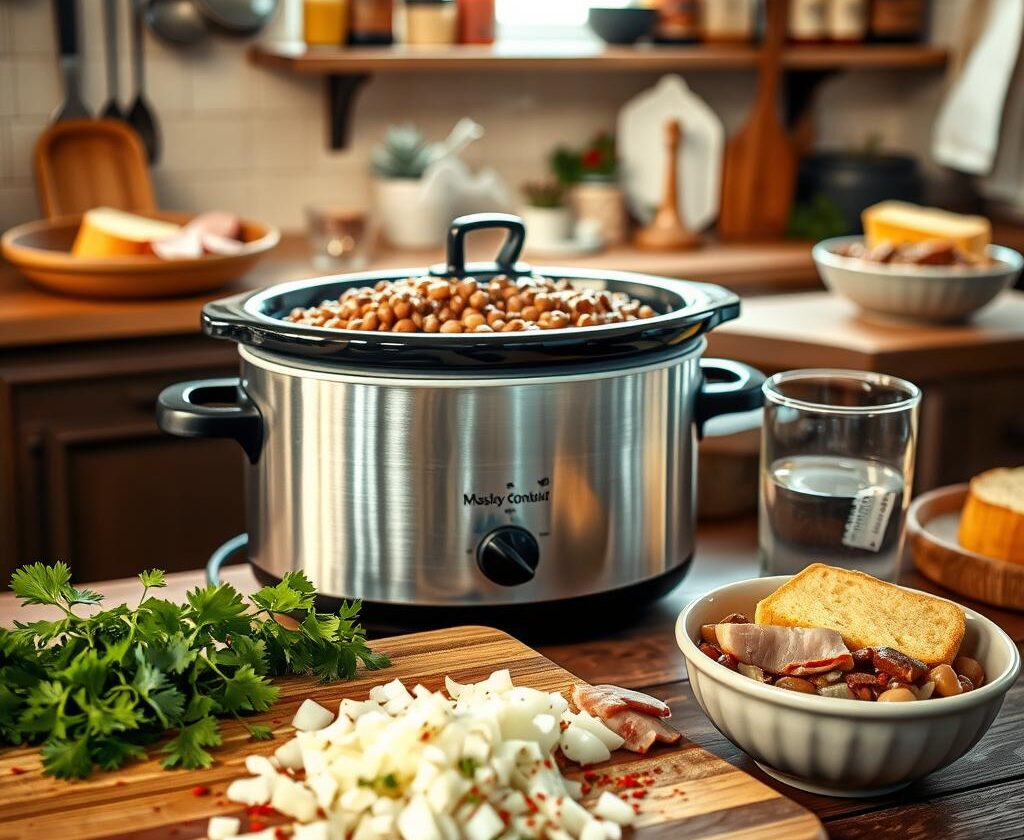
After sautéing your aromatics, transfer everything to your slow cooker. Add the soaked legumes along with remaining ingredients. Set it on low and let it work for 6-8 hours.
This method is perfect for busy days when you want dinner ready when you get home. For more inspiration, explore our collection of vegan crockpot recipes.
How to Reduce Heat and Simmer Perfectly
Stovetop cooking requires careful heat management. First, bring your pot to a full rolling boil. You’ll see large bubbles breaking the surface constantly.
Immediately reduce heat to achieve a gentle simmer. Just a few small bubbles should occasionally break the surface. This technique prevents mushiness and ensures even cooking.
Use a heavy-bottomed pot that distributes heat evenly. Set timers for each stage and stir gently every 20-30 minutes. The final uncovered simmer thickens the broth to perfect consistency.
Recipe Variations and Substitutes
What makes this recipe truly special is its incredible flexibility for personalization. You can easily adapt it to match your dietary preferences or what’s available in your pantry.
Smoked Turkey as a Delicious Alternative
Smoked turkey wings create an excellent alternative to traditional ham hocks. They provide similar smoky depth while being slightly leaner. In my experience, this version offers a lighter taste that many people actually prefer.
The poultry variation maintains all the richness of the original dish. Smoked turkey drumsticks work equally well for this adaptation.
Vegetarian Twist for Healthier Options
For a meat-free version, omit the animal products entirely. Add 1-2 teaspoons of smoked paprika to replicate that essential smoky flavor. A touch of liquid smoke enhances the authenticity.
Consider adding diced tomatoes for extra body and acidity. To boost umami, include mushrooms or a splash of soy sauce. These substitutions create a satisfying vegetarian peas recipe.
| Variation | Key Ingredient | Flavor Profile | Preparation Note |
|---|---|---|---|
| Smoked Turkey | Turkey wings/drumsticks | Lighter smoky flavor | Reduce cooking time slightly |
| Vegetarian | Smoked paprika + liquid smoke | Smoky without meat | Add umami boosters |
| Spicy Version | Double red pepper or jalapeños | Bold heat | Adjust for preference |
| Mild Family-Friendly | Omit/reduce red pepper | Gentle flavor | Perfect for kids |
This black-eyed peas recipe adapts beautifully to whatever you have available. The basic technique remains consistent across all variations, giving you confidence to customize.
Cultural and Nutritional Insights on Black Eyed Peas
The story behind this humble legume reveals a remarkable journey from West Africa to Southern American tables. These small peas carry big cultural significance that makes every bite more meaningful.
Historical Roots in Southern Cuisine
Enslaved Africans brought these legumes to America centuries ago. They carried seeds from their homeland, preserving culinary traditions through unimaginable hardship. This resilience created the foundation for southern black-eyed peas as we know them today.
A fascinating tradition involves eating them on New Year’s Day. This practice dates back to the Civil War era. Union troops raided Confederate supplies but left these peas behind, considering them animal fodder.
Southerners had these legumes to eat through winter. They came to symbolize luck and prosperity. The peas swell when cooked, representing growing wealth.

Nutritional Benefits and Dietary Value
These legumes pack impressive nutritional power. A 100g serving provides 116 calories with substantial health benefits. They’re an excellent source of folate, providing 52% of your daily needs.
You also get significant iron, magnesium, and dietary fiber. The nearly 7 grams of fiber supports digestive health and steady blood sugar. This makes them a smart choice for maintaining energy levels throughout the day.
Modern nutritionists recognize these peas as superfoods. They fit perfectly into contemporary healthy eating patterns. For more detailed nutritional information about black-eyed peas, explore our comprehensive guide.
The cultural significance extends beyond just one day per year. These legumes appear regularly in Southern gatherings, representing comfort and connection to heritage.
Expert Tips and Personal Insights
Over many pots of this dish, I’ve gathered little secrets that transform good results into great ones. These insights come from real kitchen experience, not just reading recipes.
In my experience, the single biggest game-changer is properly handling the meat. If you use a ham hock, always remove it after cooking and shred the meat to stir back in. This distributes the smoky flavor throughout instead of having one person get all the meat.
In My Experience: Small Adjustments, Big Results
Here’s a trick I learned the hard way: use whole bay leaves rather than broken ones. They’re much easier to fish out before serving. Remember, they’re not meant to be eaten!
Timing your salt adjustment is crucial. Add it as directed initially, but taste about 10 minutes before finishing. The saltiness can concentrate as liquid evaporates.
I add black pepper at the beginning, but keep a pepper mill at the table. Freshly ground pepper as a finishing touch adds a bright note that complements the deep, slow-cooked flavor.
If your pot looks too watery near the end, remove the lid for an extra 10-15 minutes. If it’s too thick, add water in ¼-cup increments. This control over consistency makes all the difference.
Use a pot that seems almost too large at first. The legumes expand significantly during cooking. You need room to stir without splashing hot liquid everywhere.
This dish actually tastes better the next day after flavors meld. Member FluffyDip9499 confirmed this when they shared, “I will make this again!” Making it ahead saves time and improves taste.
Sometimes I add just one extra garlic clove because I love garlic. You might be surprised how this small adjustment makes the whole pot more aromatic. For more about the nutritional content of this versatile legume, check out this detailed guide to black eyed peas.
Step-by-Step Cooking Instructions for a Perfect Dish
Let’s walk through the cooking process together, step by step. I’ll share exactly how I make this in my kitchen, with all the little cues that tell you when each stage is just right.

Detailed Process to Ensure Tender Peas
Start by measuring your dried legumes into a large bowl. Cover them generously with cold water since they’ll expand significantly. Let them soak for at least two hours, though overnight gives the best texture.
Heat oil in your heavy pan over medium heat until it shimmers. Add chopped onion and sauté until translucent, about five minutes. Then add minced garlic and cook just until fragrant – about 30 seconds.
Add ham hocks and water to the pan. Bring everything to a full boil with big bubbles breaking the surface. Immediately reduce the heat to a gentle simmer, cover, and cook for one hour.
Perfecting the Broth with Aromatics and Spices
After the first hour, drain your soaked legumes and add them to the pan. Include all your spices and seasonings at this stage. Bring everything back to a boil, then reduce to a simmer and cover for another hour.
Remove the lid and continue cooking for about 30 more minutes. Test for doneness by tasting one pea – it should be creamy inside without any chalkiness. The broth will thicken to a gravy-like consistency.
Finally, turn off the heat and remove the bay leaves and ham hocks. Shred the meat from the bones and stir it back into the pot. Your perfect dish is ready to serve!
Serving Suggestions and Leftover Ideas
The final step in creating a memorable meal is presenting it beautifully with complementary sides. Your slow-cooked creation deserves accompaniments that enhance its rich flavors and make it a complete dining experience.
Pairing Your Dish with Complementary Sides
For a traditional Southern feast, serve your legumes over fluffy rice or with golden cornbread. These classic pairings carry symbolic meaning during New Year’s celebrations.
Collard greens make a perfect partner, representing prosperity in Southern tradition. A bottle of hot sauce or pepper vinegar lets guests customize their heat level.
I love serving this in wide bowls with cornbread on the side. For modern variations, try roasted Brussels sprouts or a simple green salad.
Store leftovers in airtight containers for up to five days. The flavors actually improve overnight. Reheat gently, adding water if needed.
Get creative with extra portions by using them in quesadillas or mixing into scrambled eggs. For more inspiration on what to do with leftover black eyed, explore these creative ideas.
This recipe freezes beautifully for three months. Portion it for easy future meals. Garnish with fresh parsley when serving to guests for a colorful presentation.
Conclusion
When you make this recipe, you’re joining a tradition that spans generations. It’s more than just a meal—it’s a connection to history and the countless people who’ve gathered around this comforting dish.
Personally, preparing these black eyed peas has become my favorite New Year’s ritual. I love thinking about the prosperity and good fortune each new year might bring while the wonderful aroma fills my kitchen.
Don’t be afraid to make this recipe your own! Experiment with the variations we discussed. The best dishes evolve to match your taste and the people you’re cooking for.
If you’re new to cooking these legumes, remember this recipe is wonderfully forgiving. Even if things don’t go perfectly, you’ll still create something delicious that will impress your family and friends.
I hope this becomes a regular in your kitchen rotation, enjoyed whenever you want something healthy and deeply satisfying. I’d love to hear how your black eyed peas turn out and what joy they bring to your table!